
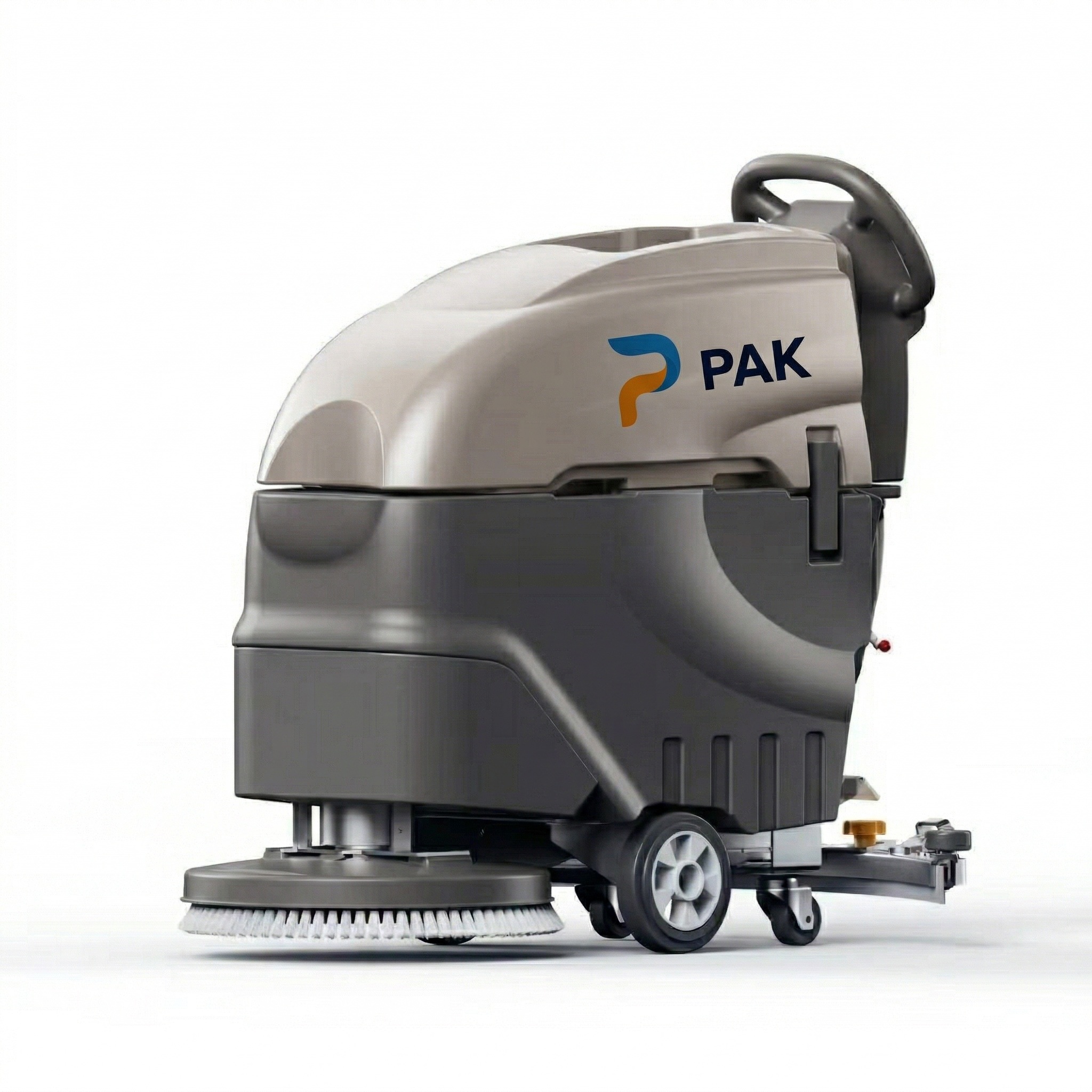
The right warehouse floor cleaning machine cannot be chosen from total building size alone. Rack aisles, loading areas, forklift routes, pallet holding areas and safety corridors define the actual working area. This guide helps you create a floor-cleaning plan that can operate without stopping warehouse activities.
Calculate the net cleanable area first
Subtract rack bases, storage areas, fixed equipment and inaccessible sections from the total floor area. Measure the narrowest aisle and turning point. Long, open main aisles may suit a ride-on machine, while rack aisles with frequent turns may need a more compact battery model. See all options in the floor cleaning machines category.
Identify the source of warehouse dirt
Forklift tire marks, sand brought in from outdoors, cardboard and packaging scraps, fine product dust and oil leaks need different pretreatment. Sweep up larger loose material first or collect it with a suitable vacuum. Then select a floor-compatible detergent and pad or brush. Test new chemicals on a small area first.
Battery walk-behind or ride-on?
Because cables are difficult to manage between racks, battery floor cleaning machines offer a mobility advantage in many warehouses. The tank capacity and working width of a model such as PAK 550 B provide a comparison point for medium and large routes. For very long main aisles and large dispatch areas, consider ride-on floor cleaning machines.
Create a route that avoids forklift traffic
Scheduling cleaning separately from shift changes, goods receiving and dispatch improves safety. Mark blind spots, pedestrian crossings and the beginning of ramps. Use wet-floor warnings and check recovery performance and remaining floor moisture before every shift.
How should catalog capacity be read?
The m²/h figure helps compare models but excludes turning and waiting time. Run a site trial in a representative aisle, including water filling and end-of-job cleaning. This shows whether the daily route fits within one charge or tank cycle.
Separate the main route from edge cleaning
A scrubber dryer delivers high, consistent practical capacity in open aisles; rack bases, wall edges and areas under pallets may need a separate edge-cleaning plan. Divide the main route into parallel strips matched to the machine’s working width. Reduce unnecessary overlap, but check that the squeegee recovers dirty water during turns. Completing edges with compact equipment in the same shift may be safer than forcing a large machine into narrow gaps.
Do not judge cleaning quality only by shine. Use a simple inspection form for returning dust, tire marks, residual moisture, dirt in corners and total time spent by the end of the shift. Several weeks of records show whether changes in routes or consumables actually help.
Maintenance plan
After every use, empty the recovery tank, inspect squeegee blades and hoses, and ensure no foreign objects remain in the brush or pad. Follow the manufacturer’s charging routine for battery models. Regular checks prevent problems such as water streaks and unpleasant odors from worsening.
Warehouse quotation checklist
- Net area and narrowest aisle
- Forklift and pedestrian traffic times
- Floor coating and dominant dirt
- Ramps, thresholds and drains
- Charging, filling and emptying areas
Before finalizing a model, read the floor cleaning machine selection guide and share site measurements with the PAK Makina sales team to create a suitable shortlist.
Frequently asked questions
Should a warehouse be swept first?
If cardboard, swarf, sand or similar loose material is present, collecting it before washing protects the recovery line.
Can a large machine be selected for rack aisles?
Yes, if both working width and turning space are suitable; otherwise a compact battery model is more efficient.
How are forklift tire marks removed?
Use a floor-compatible chemical, the correct contact time and an appropriate pad or brush. Test a small area first.
Continue reading
How to Choose a Floor Scrubber: Walk-Behind or Ride-On
Compare walk-behind and ride-on floor scrubbers by usable area, floor type, power supply, access width, tanks and real cleaning time.
Read article
Floor Scrubber Types: Corded, Battery and Ride-On
Compare mains-powered, battery-powered and ride-on floor scrubber dryers with floor scrubbing equipment. Review the model and tank details before purchase.
Read article
Choosing a Machine for Factory and Concrete Floor Cleaning
Match factory floor equipment to concrete or epoxy, dust and oil, production routes, shifts and measurable cleaning results.
Read article