
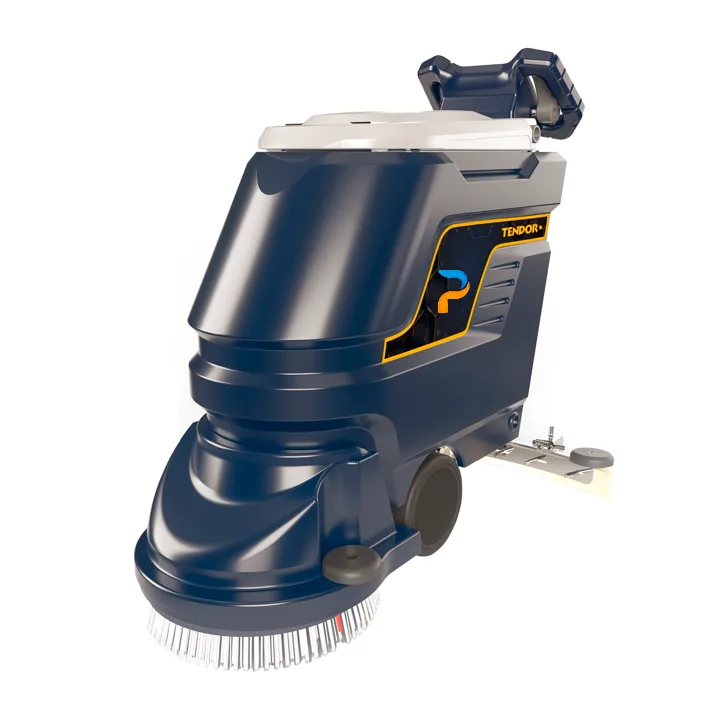
A floor scrubber that leaves water behind does not automatically need a replacement vacuum motor. Begin with permitted operator checks. Describe the symptom first: one narrow streak, water at turns, a broad wet trail, or detergent residue after drying. Recording where the problem appears helps distinguish a recovery problem from an unsuitable cleaning process.
Make the machine and work area safe
Keep pedestrians away from the wet area. Before physical inspection or cleaning, stop the machine and isolate it as instructed in its own manual. This guide covers operator maintenance, not electrical repairs. Do not open electrical compartments or defeat protective devices.
Seven checks for poor water recovery
Debris on the squeegee blade
Remove hair, thread and trapped debris using the approved cleaning method. A streak that repeatedly appears in the same position is worth photographing. Follow the model instructions for rotating or replacing worn blades.
Squeegee contact with the floor
Compare a straight pass with a turn. Check that the squeegee is in its working position. Do not experiment with blade pressure or angle; make adjustments only where the manual identifies them as operator tasks.
Recovery hose connections
Look for disconnected fittings, visible damage or kinks at accessible points. Avoid pushing tools into concealed components. Clear a blockage only by the procedure permitted for your model.
Recovery tank lid and seal
Debris beneath the lid or a poorly seated seal can affect recovery. Clean the contact surface and close the lid correctly. Ask for the appropriate replacement if the seal is damaged rather than making an improvised adhesive repair.
Full tank and protection system
Empty the recovery tank at a suitable disposal point. Clean any operator-accessible float or screen according to the manual. Never secure a float open or bypass the full-tank cutoff.
Foam and detergent residue
Excessive foam differs from a film that remains after the floor dries. Check detergent compatibility and dilution. Do not mix chemicals or add a defoamer unless the manufacturer permits that approach.
Settings and floor conditions
Confirm that vacuum recovery is enabled through the normal operating controls. Compare solution settings, joints, uneven areas and turns with a straight pass. Review pad and brush selection if the cleaning process also leaves residue.
Confirm the result on a controlled test area
Prepare the machine for operation following its manual. Test the same floor under comparable conditions, changing one permitted setting at a time. Record the cleaning product, solution setting, trail location and photographs. A before-and-after record is more useful than repeatedly changing several settings without a reference.
What to send to technical support
Stop using the machine if recovery remains poor or you find damage, unusual noise, smell or an electrical fault. Send the model, serial number, short video and completed checks through technical support. For a future equipment review, compare floor scrubber dryers against your actual cleaning route.
General operator references: Tennant T20 troubleshooting guide and Nilfisk SC650 instructions for use. These are not PAK operating manuals. Follow the instructions supplied with your particular machine.
Continue reading
Battery Floor Scrubber Charging and Shift Planning
Plan battery floor scrubber shifts using real cleaning time, transport, tank stops and approved charging instructions. Includes an illustrative shift log.
Read articleHow to Choose a Floor Scrubber: Walk-Behind or Ride-On
Compare walk-behind and ride-on floor scrubbers by usable area, floor type, power supply, access width, tanks and real cleaning time.
Read article
Floor Scrubber Types: Corded, Battery and Ride-On
Compare mains-powered, battery-powered and ride-on floor scrubber dryers with floor scrubbing equipment. Review the model and tank details before purchase.
Read article