How to Choose Pressure and Flow Rate for a Pressure Washer
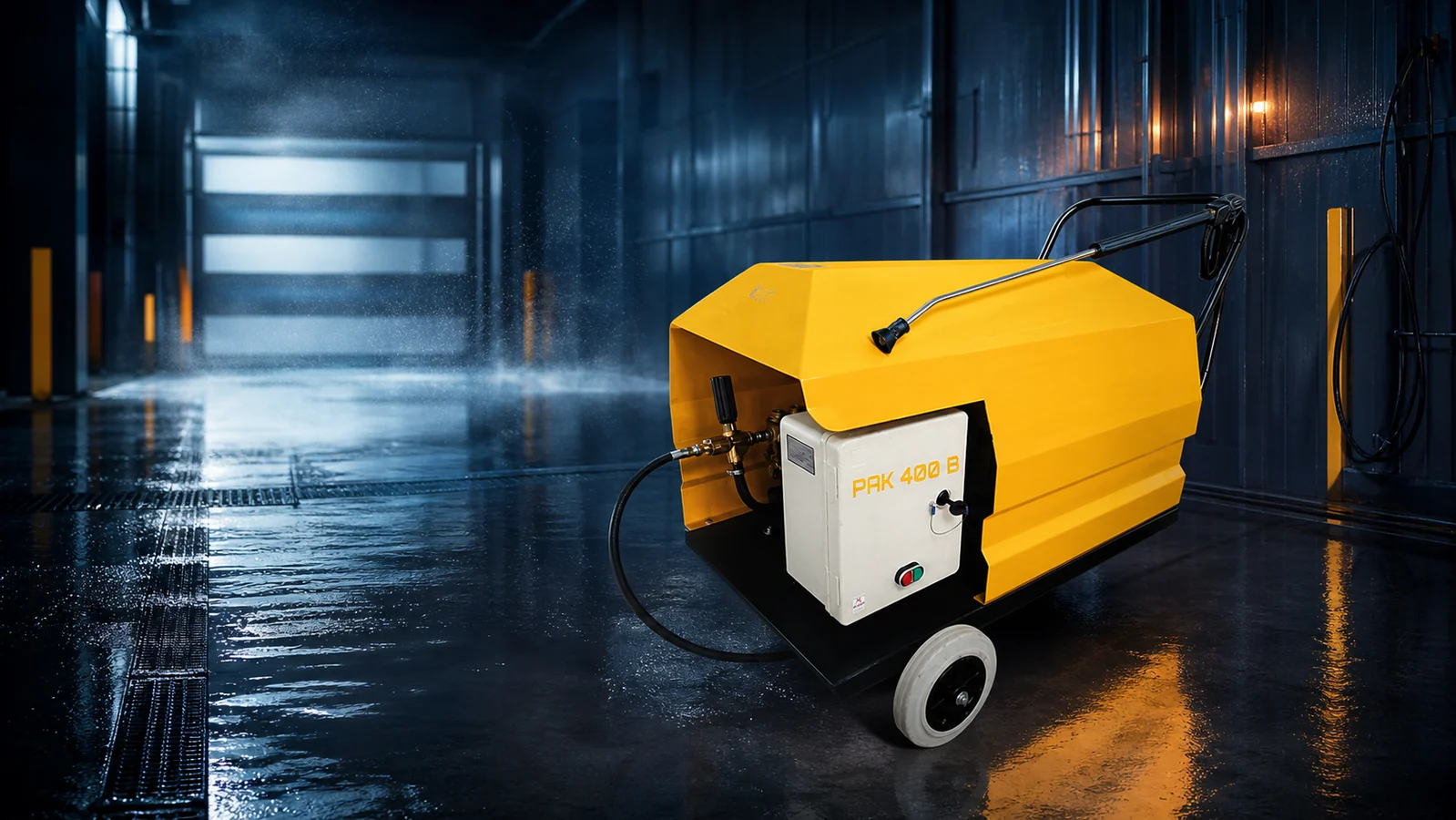
When choosing a pressure washer, selecting the highest bar rating in the catalog is not enough to ensure the right result. Pressure helps detach dirt from a surface; water flow helps carry the loosened dirt away. Nozzle angle, working distance, water temperature and the surface’s resistance also determine the actual cleaning result.
This guide explains how to assess pressure and flow together for car washes, workshops, factories, agricultural equipment and heavy industry. Compare current equipment groups on the pressure washers page.
What does the bar rating tell you?
Bar expresses the pressure generated by water within the system. Appropriate pressure helps loosen adhering mud, oil residue, coating residue and production dirt. A higher value does not produce a better result on every surface. Excessive pressure can damage vehicle paint, seals, electrical connections, soft stone and delicate coatings.
The maximum pressure and continuous operating pressure listed in a catalog may differ. During purchasing discussions, ask at what pressure the machine is designed to operate continuously, and confirm the safety-valve setting and nozzle size together.
Why is flow rate at least as important as pressure?
Flow rate is usually given in liters per hour or liters per minute. Sufficient water volume is needed to transport detached dirt and remove foam and chemical residue. A high-pressure system with low flow may break up dirt in a small area, while carrying dirt away and rinsing a large floor can take longer than expected.
It is also incomplete to consider flow only as “greater water consumption.” If a more balanced flow finishes the job sooner, total operating time, electricity use and labor cost may decrease. Comparing total time and water per cleaned area or vehicle is therefore more meaningful than comparing hourly consumption alone.
How do the nozzle, distance and angle change cleaning power?
The nozzle shapes the flow produced by the pump into a particular spray pattern. A narrow-angle jet concentrates the same power on a small area; a wider-angle jet cleans a larger surface with greater control. Moving the nozzle too close can damage a coating even at a pressure that appears safe.
- Always start with a wider angle and a greater distance.
- Test surface resistance in a small, inconspicuous area.
- Do not enlarge the nozzle opening with a drill or fit a nozzle at random.
- Remember that a worn nozzle can disrupt pressure and the spray pattern.
- Do not disconnect the trigger gun, hose or fittings while they are pressurized.
Which approach suits each application?
| Application | Primary selection criterion | Points requiring care |
|---|---|---|
| Vehicle exterior | Controlled pressure, balanced flow and suitable foaming | Distance from paint, plastic parts, seals and electrical equipment |
| Service and workshop floors | Flow that carries dirt away, degreaser compatibility and drainage | Slip risk, wastewater and oil separation arrangements |
| Agricultural and construction machinery | A pressure/flow balance that removes dried mud | Direct jets on bearings, seals, sensors and radiator fins |
| Production equipment | Pressure, temperature and chemicals appropriate to process dirt | The equipment manufacturer’s cleaning procedure and electrical isolation |
| Heavy industry and surface preparation | A high-pressure class, safe accessories and a trained team | Recoil, detached surface material and serious injury risk |
Assess water-jet systems for high-pressure industrial work separately from cold-water pressure washers for standard professional cleaning.
When should a 500 bar water jet be considered?
Systems in the 500 bar class are not simply more powerful versions of ordinary car-washing equipment. They may be considered for heavy deposits on hard, resistant surfaces, suitable surface preparation or specialist industrial cleaning. Gun recoil, hose safety, protective equipment and operator training must be planned alongside application pressure.
Requesting a quotation based only on pressure, without knowing the surface material, dirt thickness and required result, is not an adequate approach. A trial can help prevent unintended surface removal and investment in an unnecessarily large machine.
How should the pump, motor and electrical supply be matched?
As the pump produces the required pressure and flow, the motor must be able to sustain that load. Voltage, phase, cable cross-section, protective fuse and socket infrastructure must meet the machine’s technical requirements. Long extension cables with inadequate conductor size can cause voltage drop, overheating and faults.
The water supply must also meet the pump’s demand. Insufficient inlet water, air intake and problems such as cavitation can shorten pump life. Include the inlet filter, water quality and freezing risk in the maintenance plan.
If possible, request an application video on a similarly dirty surface or a controlled trial during quotation discussions. This makes it easier to see how catalog figures translate into real working speed and to select the correct hose/nozzle arrangement.
Checklist before purchase
- List the surfaces to be cleaned and the most difficult dirt.
- Determine daily operating time and the number of shifts.
- Measure the required hose length and movement area.
- Check incoming water flow and the electrical supply.
- Clarify whether hot water or chemical application is needed.
- Ask about service and parts for the pump, seals, hose, gun and nozzle.
- Calculate total cost using consumables, maintenance and job time as well as the machine price.
Frequently asked questions
Does higher pressure always clean better?
No. The result depends on choosing pressure, water flow, nozzle, surface, dirt type and working distance correctly together.
Does a car wash need a 500 bar machine?
For general vehicle exterior cleaning, 500 bar is usually unnecessary and poses a surface-damage risk. This class is mainly considered for heavy industrial applications using appropriate equipment and training.
Does a higher flow rate always increase water consumption?
Instantaneous consumption may rise, but faster removal of dirt can shorten total working time. A sound comparison uses total water and time per job, not hourly flow alone.
Why must the nozzle match the machine’s technical specifications?
An incorrect nozzle can change operating pressure and pump load. Its size must match the pump’s pressure/flow ratings and the manufacturer’s recommendation.
Continue reading
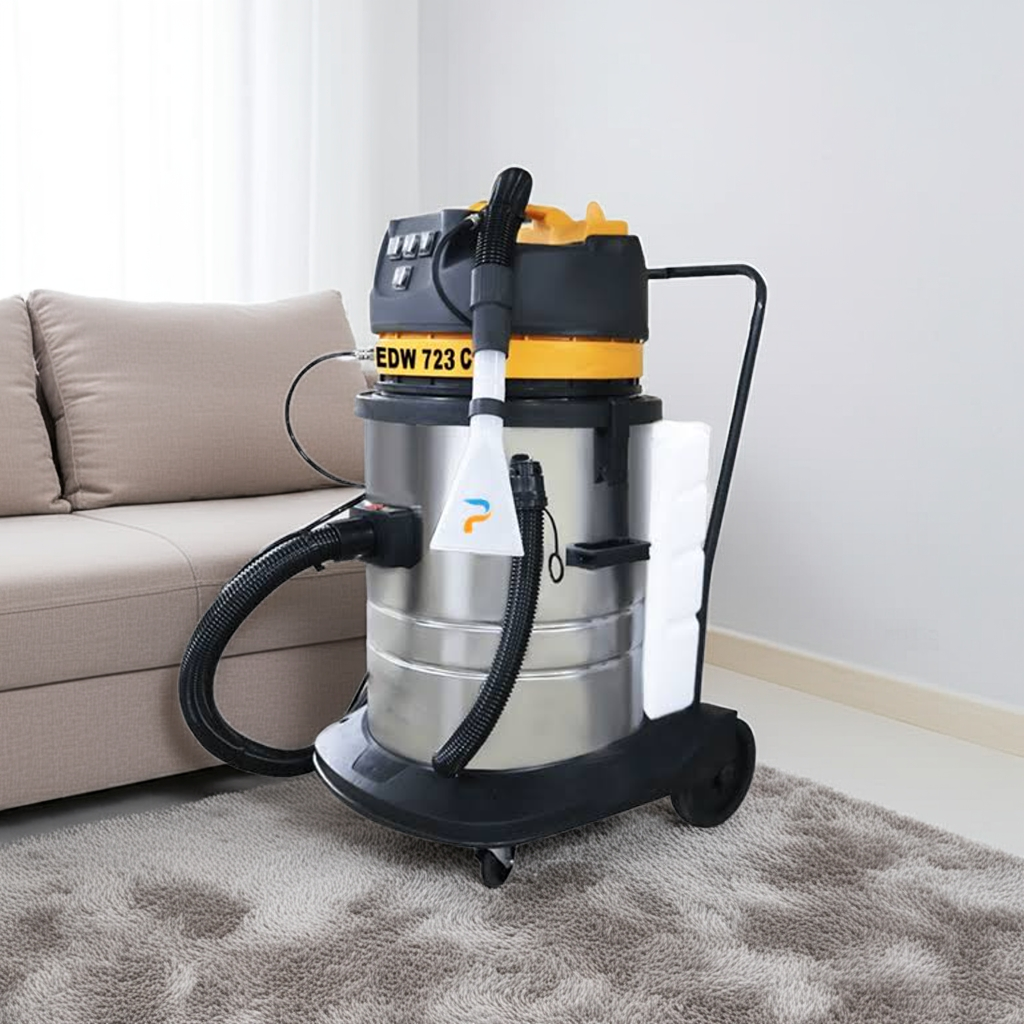
Three-Motor Professional Upholstery Extractors: Features and Benefits
Assess a three-motor upholstery extractor by vacuum recovery, tank capacity, tools, handling and service support. See where this configuration can be useful.
Read article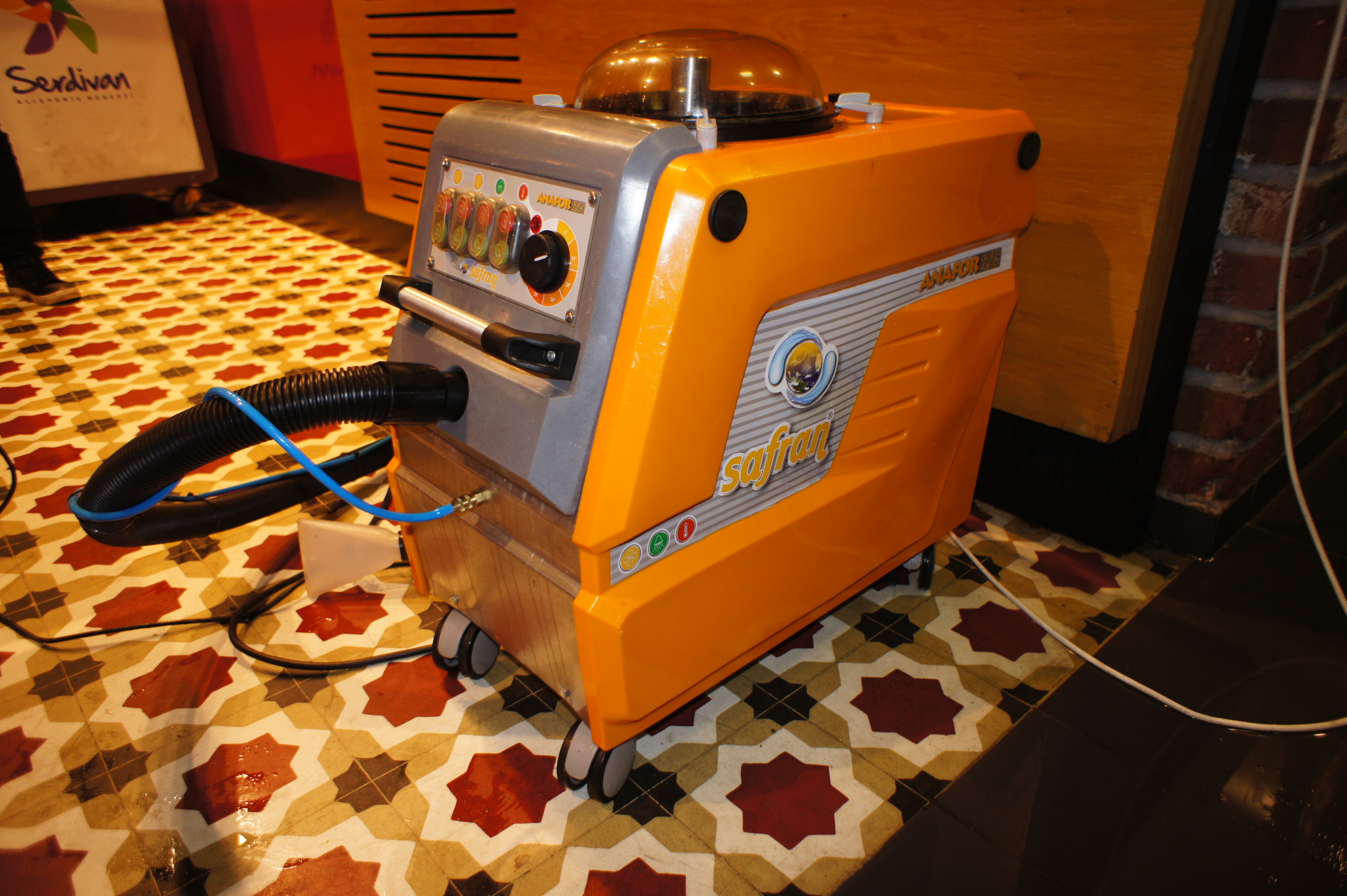
Safran Anafor 12/16 Upholstery Cleaning Machine
Read the historical Anafor 12/16 specifications, attachments and operating steps. Check current ratings, price and safety documentation before purchase.
Read article
Induction-Motor Industrial Vacuums: When to Consider Them
Compare induction-motor industrial vacuums with commutator-motor designs. Check rated duty, noise, filtration, maintenance and the actual workload.
Read article