
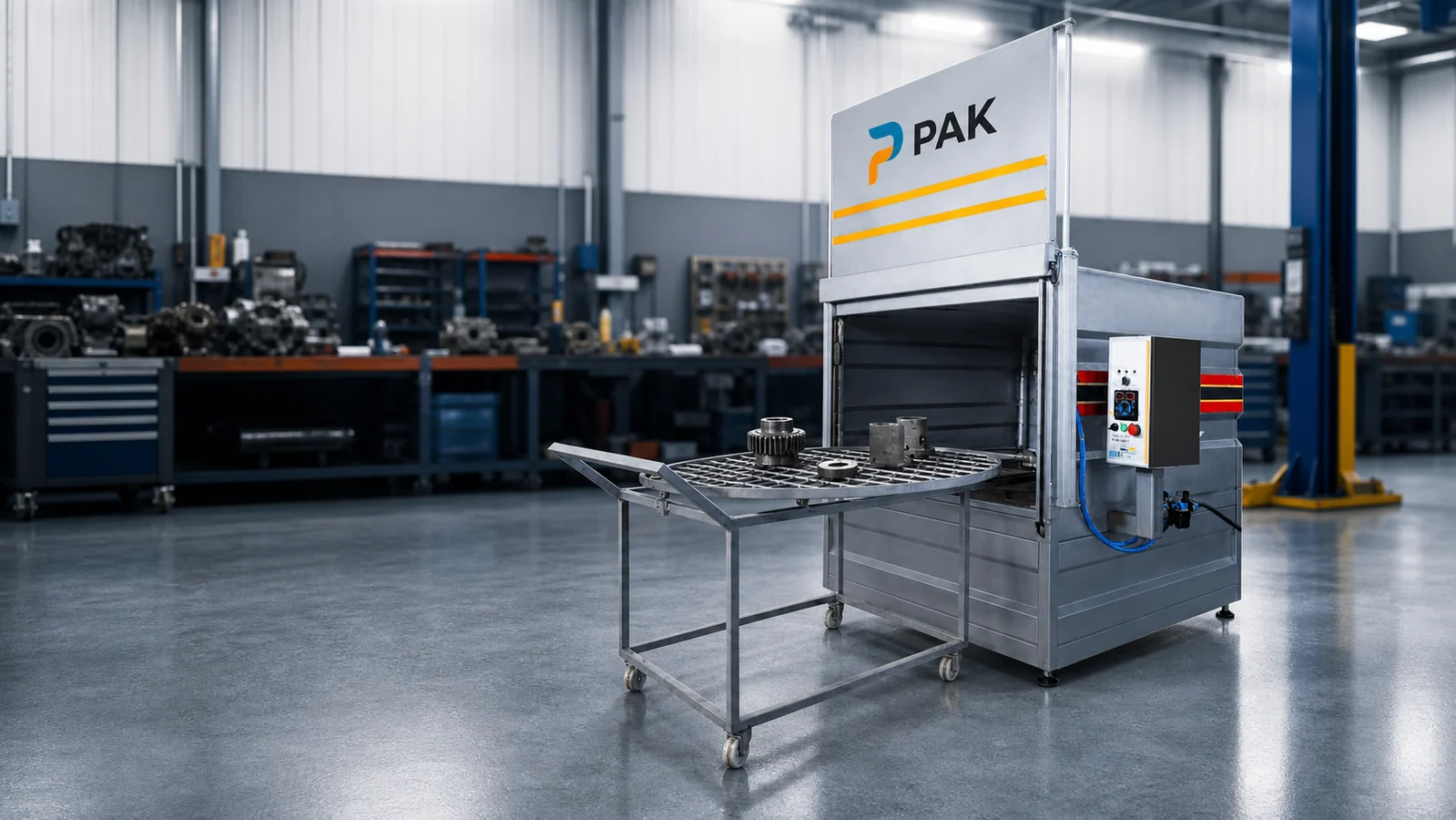
A parts washer removes adhering oil, swarf, soot and process residue in a controlled way during maintenance and production. Enclosed rotating-basket systems can reduce the need to wash parts individually by hand, but efficient results depend on matching basket dimensions, load capacity, temperature and filtration to the actual workload.
This guide explains the technical questions needed to select a system for automotive service, engine rebuilding, metalworking, maintenance workshops and production plants. Explore the product group in the parts washers category.
How does a rotating-basket parts washer work?
Parts are distributed evenly in the basket. Once the cabinet is closed, cleaning liquid from the tank is heated, depending on the model, and pumped to the nozzle system. Movement of the basket or spray system helps the liquid reach different surfaces. Dirty liquid returns to the tank; filters, strainers or oil-separation equipment, where fitted, control the dirt load within the cycle.
Equipment differs between machines. Heating power, pump pressure, basket drive, filtration and oil separation must each be confirmed separately in the quotation.
How should basket diameter and load capacity be calculated?
Selecting solely for the largest part may overlook the daily volume of smaller parts. First measure the largest part’s diameter, height and weight, then calculate the average number of parts per cycle. Arrange them so they do not block nozzle flow or damage one another.
- External dimensions and weight of the largest part
- Average number of parts loaded together
- Centers of gravity and the possibility of balanced loading
- Target number of cycles per shift
- Crane, trolley or operator requirements for loading and unloading
Do not exceed the basket’s load rating. An unbalanced load can place unnecessary stress on the basket drive and bearings; spray shadows may leave some surfaces insufficiently cleaned.
Consider temperature, pressure and chemicals together
For oily dirt, heat can improve the cleaning chemical’s action and shorten the cycle. However, aluminum, brass, painted parts and delicate coatings may be unsuitable for high temperatures and strongly alkaline products. Choose chemicals for the part material as well as the dirt.
| Dirt or part condition | Factor to assess | Risk |
|---|---|---|
| Heavy grease and oil | Temperature, suitable degreaser and cycle time | Rapid oil accumulation in the tank |
| Parts carrying swarf | Strainers and easily cleaned filtration | Blocked nozzles and pump wear |
| Aluminum parts | Material-compatible chemicals and controlled temperature | Darkening or a surface reaction |
| Blind holes and complex shapes | Part arrangement, nozzle access and a second orientation if needed | Spray shadows and trapped liquid |
| Painted or coated surfaces | A low-risk trial and chemical compatibility | Dulling or lifting of the coating |
Why are filtration and oil separation important?
As liquid is reused in a closed circuit, oil, sediment and metal particles collect in the tank. A coarse strainer catches larger particles; finer filtration may help protect nozzles and the pump. Where an oil separator is fitted, removing floating free oil can extend bath life. The same result should not necessarily be expected for emulsified oil.
Match filter capacity to the dirt carried by the parts. A very fine filter is not always an advantage: rapid blockage can increase maintenance frequency. Include replacement cost and market availability in the purchasing calculation.
How do you determine cycle time and real production capacity?
A cycle is more than the minutes spent washing. Measure loading, closing the lid, reaching temperature, washing, waiting/draining and unloading together. A ten-minute wash program, for example, may become a twenty-minute total cycle once operating steps are included.
For daily capacity, divide the shift duration by total cycle time and allow realistically for planned maintenance, basket cleaning and operator breaks. This helps prevent choosing an undersized machine.
If a part must proceed directly to assembly, painting or measurement, include drying requirements in the cycle. Where compressed air, a hot rinse or a separate drying method is planned, account for occupational safety and energy requirements from the outset.
What infrastructure should be prepared before installation?
- Machine voltage, phase, power and fuse requirements
- Clean-water filling and a controlled discharge point
- A level, solid floor able to support the machine
- Clearance around the machine for lid movement and maintenance
- A parts trolley, crane or lifting arrangement
- Chemical storage, an eyewash station and personal protective equipment
Before discharging waste liquid directly to a drain, check local requirements and the plant’s waste-management procedure. Liquids containing oil, heavy metals or process chemicals may need special treatment.
Daily and periodic maintenance plan
- Check the basket, coarse strainer and tank level every shift.
- Watch for blocked nozzles or irregular spray patterns.
- Test the lid seal, safety interlock and emergency stop.
- If filter pressure indicates a problem or flow falls, follow the maintenance instructions.
- Record changes in pump noise, leaks and basket movement.
- Monitor chemical concentration using the product’s prescribed method, not by eye.
See a rotating-basket example on the parts washer product page. Having a photograph, dimensions and weight of the largest part, along with daily quantities, makes capacity discussions and quotation preparation more efficient.
Frequently asked questions
How does a rotating-basket parts washer operate?
Parts are placed in the basket. Once the cabinet closes, cleaning liquid at the appropriate temperature is sprayed through nozzles, while basket movement helps wash surfaces evenly.
Is machine capacity selected by part weight?
Weight matters, but it is not the only criterion. Largest-part dimensions, basket diameter, height, weight distribution and parts per shift must be calculated together.
Can any cleaning chemical be used?
No. The chemical must suit the part material, dirt, machine seals and pump, and the manufacturer’s instructions. Flammable solvents may only be used in systems specifically designed for them.
When should the wash liquid be changed?
Monitor dirt load, oil quantity, filtration performance, pH or the manufacturer’s recommended criteria instead of relying on a fixed number of days.
Continue reading
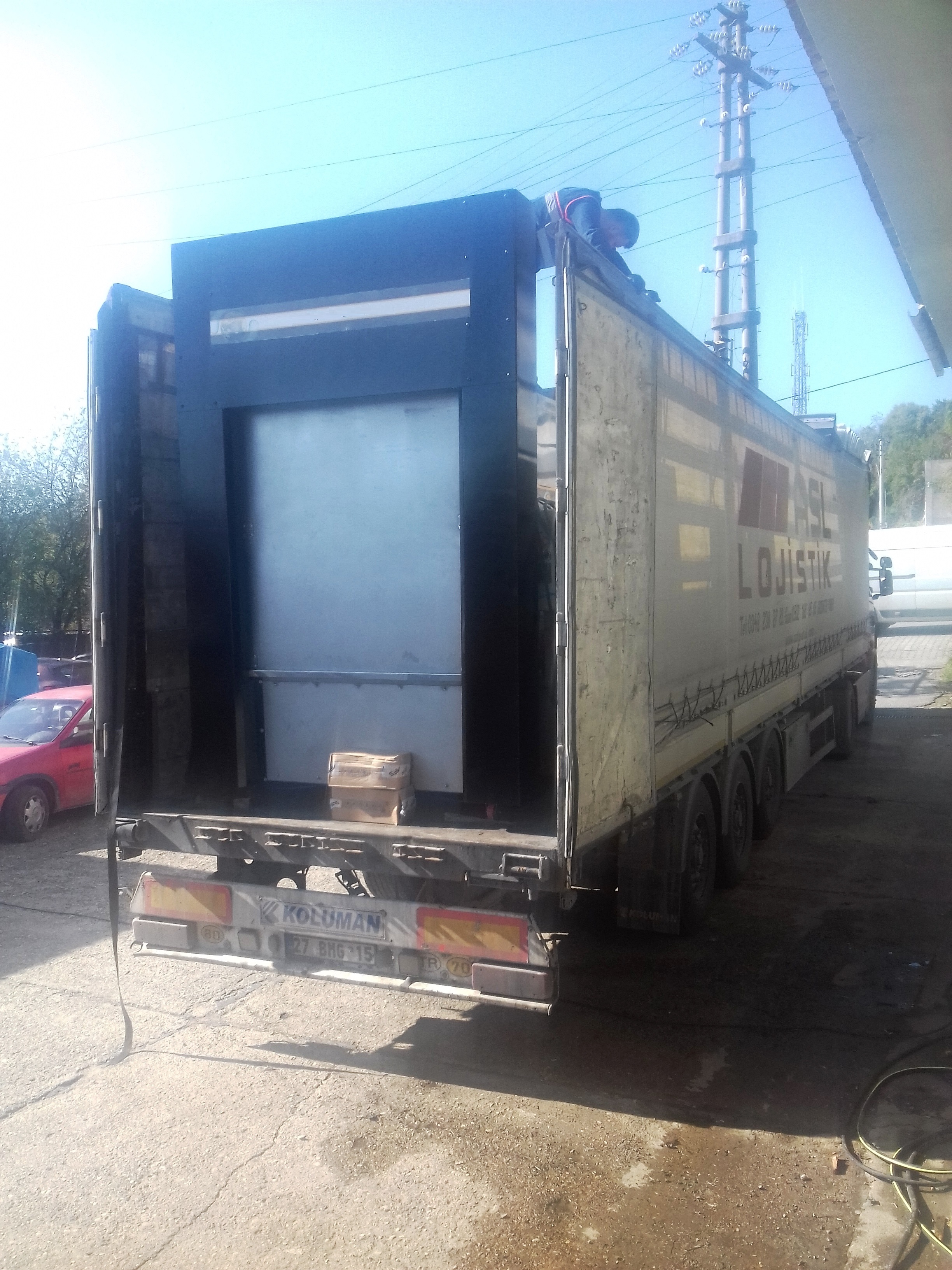
PYM 1500 Parts Washing Machine Dispatched to Gaziantep
PAK Makina reports completing a PYM 1500 parts washing machine for a Gaziantep vehicle-care business, with a build period of one month.
Read article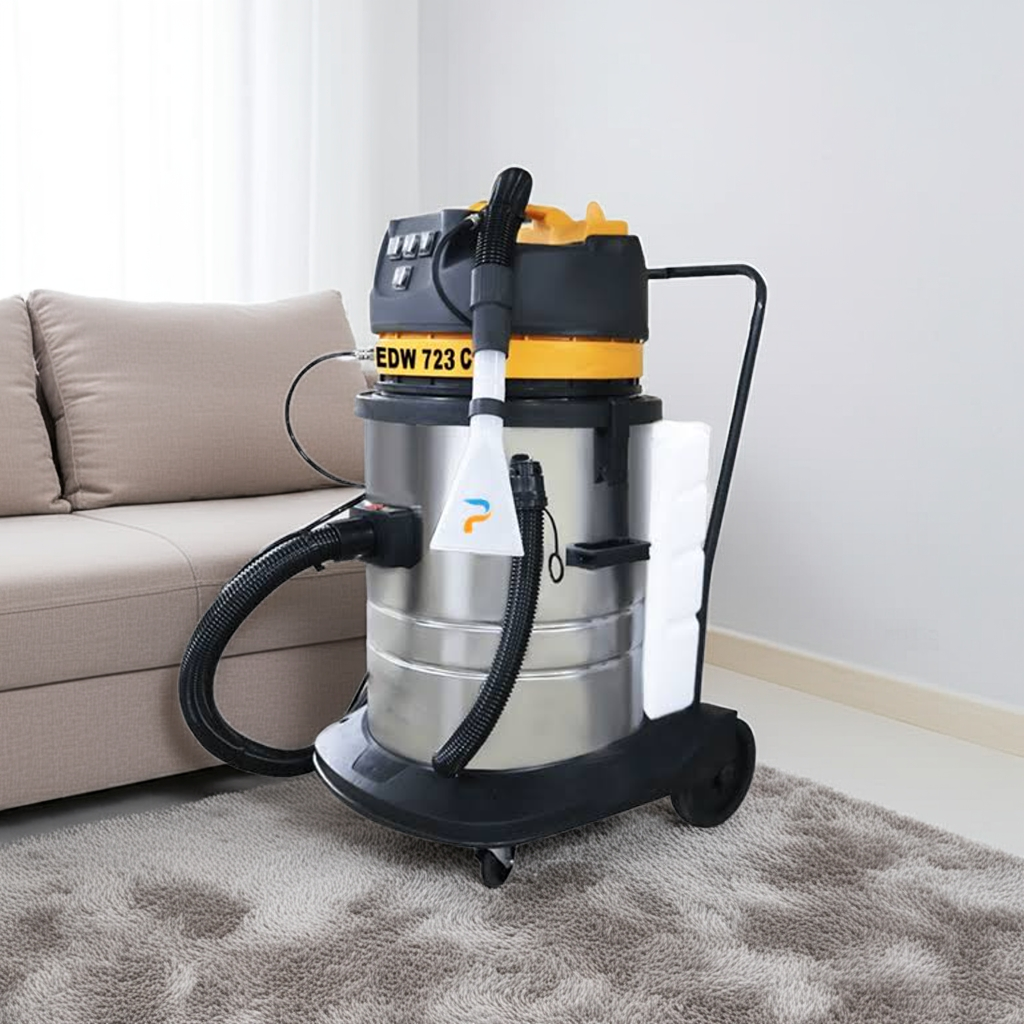
Three-Motor Professional Upholstery Extractors: Features and Benefits
Assess a three-motor upholstery extractor by vacuum recovery, tank capacity, tools, handling and service support. See where this configuration can be useful.
Read article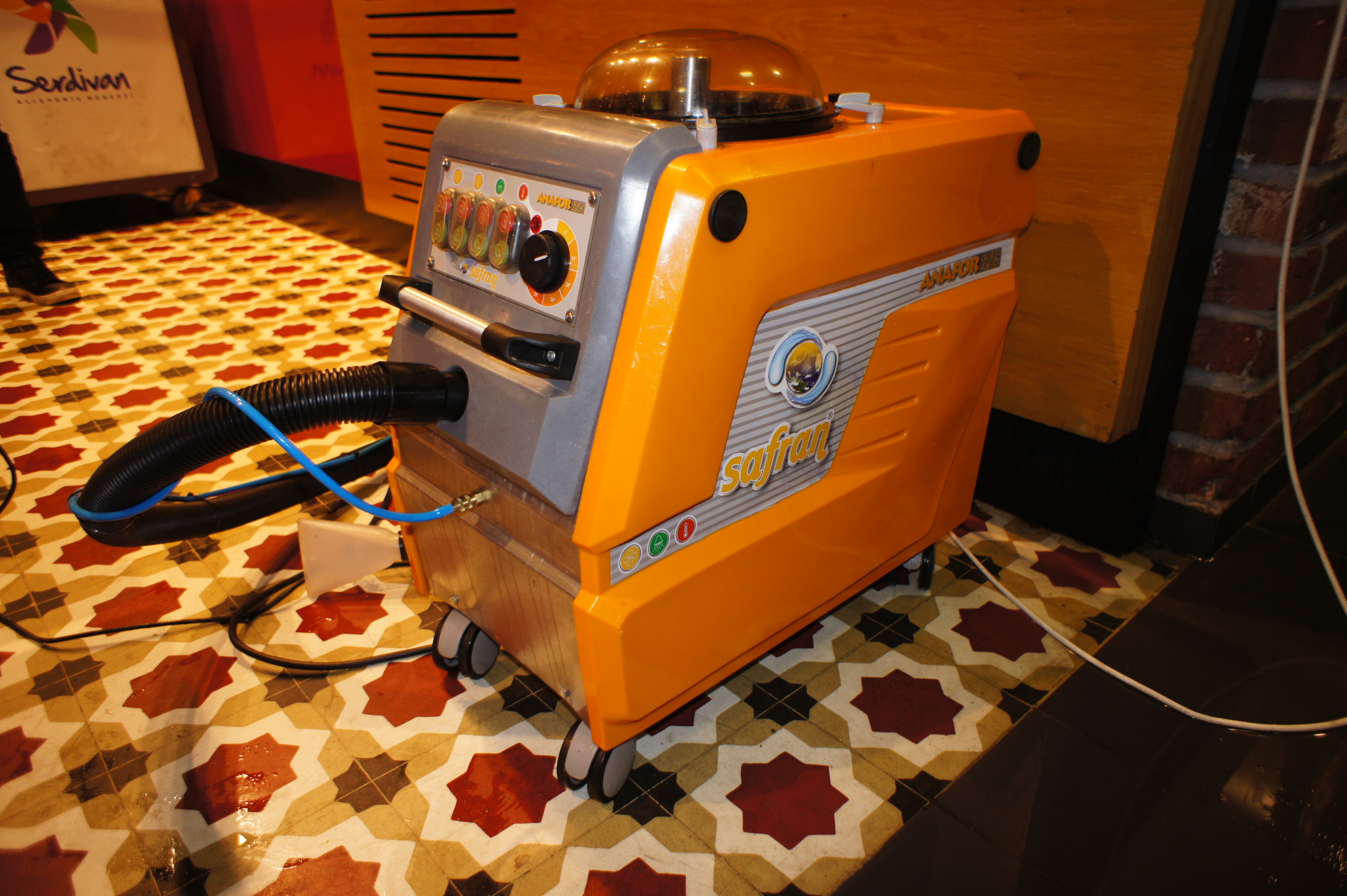
Safran Anafor 12/16 Upholstery Cleaning Machine
Read the historical Anafor 12/16 specifications, attachments and operating steps. Check current ratings, price and safety documentation before purchase.
Read article