
How to Clean a Sofa: Professional Upholstery Extraction Steps
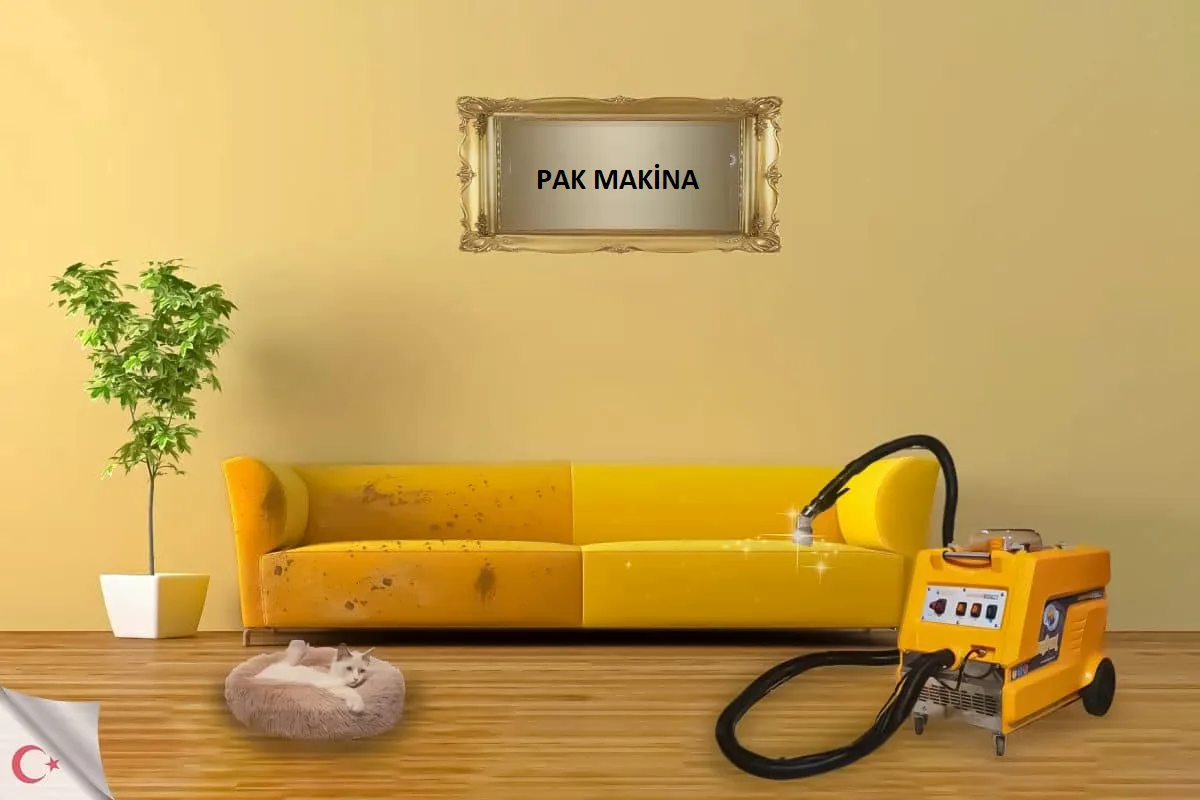
How do you clean a sofa? There is no single method for every fabric: synthetic upholstery, linen blends, velvet, wool and viscose may respond differently. Professional results start with identifying the fabric and stain, then working carefully with the minimum necessary moisture.
The following steps describe a general workflow using a spray-extraction upholstery cleaning machine. If the fabric care label or manufacturer's instructions differ, those instructions always take priority.
Inspect the sofa before cleaning
Inspect the sofa in daylight or under strong lighting. Note tears, loose stitching, loose buttons, fading, existing water marks and significant stains. When providing a professional service, recording these conditions with the customer helps prevent misunderstandings afterwards.
- Check the care label and any cleaning symbols.
- Test colourfastness on a small, concealed area.
- Assess whether water-sensitive filling or metal components are present beneath the fabric.
- Make the electrical connections of powered seating safe before work.
Upholstery cleaning steps
1. Remove dry soil
Vacuum the entire surface, including cushion gaps, seams and the undersides of armrests. Wet treatment without first removing dry dust can turn soil into slurry within the fabric, making recovery harder.
2. Mix the cleaning product at the correct dilution
Measure the product according to its label. More chemical does not mean better cleaning: excess product can leave residues, stiffen the fabric and accelerate resoiling. Do not mix products unless the manufacturer specifically permits it.
3. Test a small area
Apply the mixture to a concealed section. Stop if colour transfers to the test cloth, the texture changes or a ring develops. Natural fibres and dark fabrics require particular care.
4. Apply a controlled pretreatment
Apply a light, even treatment rather than saturating the surface. Follow the labelled dwell time, and proceed before the treated area dries completely.
5. Agitate with a brush suitable for the fabric
Use a soft brush with attention to seam direction and fabric texture. Heavy pressure does not necessarily remove a stain; it may disturb the pile or cause pilling.
6. Spray and recover at the same time
Move the upholstery tool in small strips. Recover the dirty solution as you apply it, then make one or two vacuum-only passes. The aim is to recover loosened soil, not simply to wet the fabric.
7. Complete a final inspection
Check for excess moisture at cushion edges, around buttons and at joins. Make additional vacuum-only passes if needed. Position cushions so air can circulate around them.
Compare current professional equipment on the upholstery cleaning machines page.
Should every stain receive the same treatment?
No. Oil, drinks, ink, paint, urine and old cleaning residues have different characteristics. If the stain is unknown, start with a lower-risk method and a small-area test rather than an aggressive product.
- Work from the outside of the stain towards the centre to reduce spreading.
- Blot rather than rub where appropriate to the treatment.
- Do not promise complete removal: an old stain may have permanently altered the fabric colour.
- If the odour source has reached the filling, surface cleaning alone may be insufficient.
How should a sofa be dried?
Ventilate the room after cleaning and provide cross-ventilation where possible. Do not stack cushions. In humid conditions, fans or appropriate dehumidification may help. Direct, excessive heat can cause marks, shrinkage or adhesive damage in some upholstery.
Drying time depends on fabric thickness, filling, room temperature, relative humidity, the amount of applied water and extraction performance. Do not cover the sofa or return it to heavy use before it has dried completely.
Home maintenance versus professional extraction cleaning
Routine surface care can be carried out at home. Where there is extensive colour-bleeding risk, substantial staining, unpleasant odour or overwetting, appropriate professional equipment and expertise may be safer. An extractor recovers dirty water, but the result still depends on the operator's fabric knowledge and technique. If you plan to provide this service commercially, see the guide to starting an upholstery cleaning business.
Frequently asked questions
Can hot water be used to clean a sofa?
It is not suitable for every fabric. Do not use high temperatures without checking the care label, product instructions and colourfastness test.
Can washing-up liquid or bleach be used?
Products not formulated for upholstery can cause residue, colour loss or fibre damage. Choose a compatible professional product with clear instructions and dilution ratios.
Why does a sofa smell after cleaning?
Overwetting, inadequate extraction, chemical residue or slow drying can cause odours. Surface cleaning alone may not address organic contamination within the filling.
How many vacuum passes are needed?
There is no fixed number. Make controlled vacuum-only passes until water recovery at the tool decreases and unnecessary surface moisture has been removed.
Summary: correct sofa cleaning follows fabric identification, a small-area test, measured chemical use, controlled moisture and effective recovery. Prioritise fabric safety and suitable drying conditions over speed.
Continue reading
How to Start an Upholstery Cleaning Business: A Practical Guide
Plan an upholstery cleaning business: choose a spray extractor, build a safe cleaning process, calculate job costs and organise your first bookings.
Read article
Upholstery Cleaning Machine Prices and Model Comparison
Compare PAK upholstery extractors, vacuum motor options, hot-water and steam systems. Check accessories, running costs and dated Türkiye price examples.
Read article
Three-Motor Professional Upholstery Extractors: Features and Benefits
Assess a three-motor upholstery extractor by vacuum recovery, tank capacity, tools, handling and service support. See where this configuration can be useful.
Read article